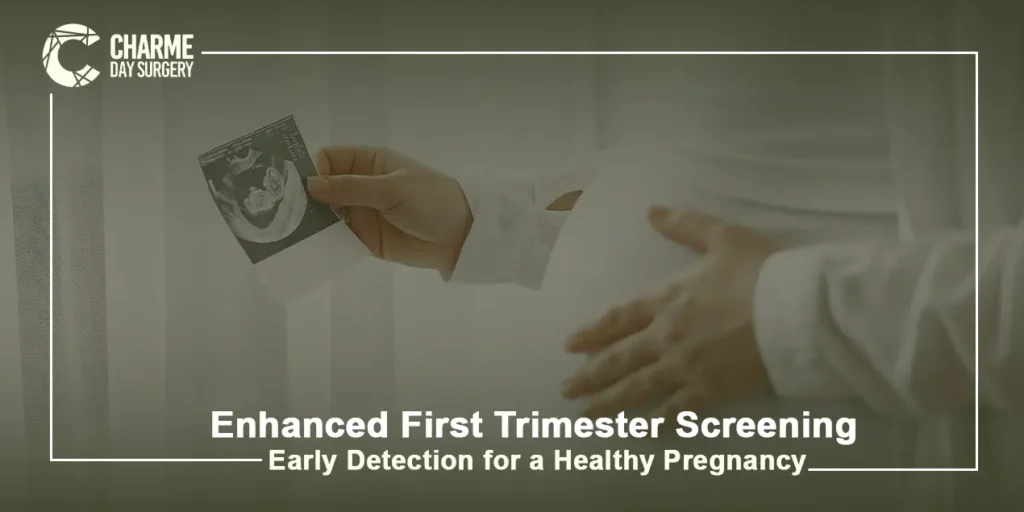
Enhanced first trimester screening is a specialized prenatal assessment performed between the 11th and 14th weeks of pregnancy to evaluate the likelihood of certain chromosomal conditions and early developmental issues in a fetus. It combines a high-resolution ultrasound with maternal blood analysis to provide a risk profile rather than a definitive diagnosis. This proactive approach provides an early window into the womb, enabling parents and healthcare providers to gather essential health data during the most critical stages of embryonic development.
What Is Enhanced First Trimester Screening?
Enhanced first trimester screening represents an advanced evolution in prenatal care, moving beyond basic observations to a more comprehensive data-driven analysis. It is a non-invasive procedure designed to be the first major health check for a developing baby. This screening is often referred to as a “combined test” because it looks at multiple biological indicators simultaneously to create a statistically significant picture of fetal health.
Unlike traditional methods that might rely on a single factor, this enhanced approach synthesizes various data points. Think of it as a security system with multiple sensors; if one sensor is triggered, it doesn’t necessarily mean there is an intruder, but it prompts a closer look. This screening provides that “closer look” at a stage when many parents are still just beginning to share their happy news with the world.
Why is this screening performed early in pregnancy?
- The screening is typically performed in the late first trimester, a carefully selected timeframe based on scientific evidence.
- Certain biological markers can only be detected or accurately measured during this limited early window.
- Early pregnancy screening provides parents with critical information at a stage when the widest range of follow-up options and medical decisions is still available.
- Identifying potential concerns in the first trimester, rather than later in pregnancy, helps reduce anxiety and prolonged uncertainty.
- Early detection allows timely referral to appropriate specialists, such as genetic counselors or maternal-fetal medicine experts.
- If additional monitoring is needed, early screening ensures that a structured care plan is already established before the second trimester begins.
What Does Enhanced First Trimester Screening Include?
The “enhanced” aspect of this screening refers to the synergy between visual imaging and biochemical laboratory work. It is a two-part process that provides a much higher detection rate than using either method in isolation. When combined, these elements offer a nuanced perspective on the baby’s chromosomal health and physical structure.
Ultrasound assessment (nuchal translucency)
The centerpiece of the visual assessment is the nuchal translucency scan. During this specialized ultrasound, a sonographer measures the clear (translucent) space at the back of the baby’s neck. All babies have some fluid in this area, but an increased measurement can sometimes be an early indicator of chromosomal conditions or heart defects.
It is helpful to think of the nuchal translucency as a small “pocket” of fluid that acts as a biological marker. The precision required for this measurement is immense, often involving fractions of a millimeter. This specific type of ultrasound in obstetrics and gynecology requires specialized training to ensure the measurement is taken at the exact right angle and moment of fetal movement.
Blood tests used in enhanced screening
Complementing the ultrasound are specific blood tests that measure two proteins found in the mother’s blood: Pregnancy-Associated Plasma Protein-A (PAPP-A) and Human Chorionic Gonadotropin (hCG). In a typical pregnancy, these proteins exist within specific ranges. If the levels are unusually high or low, it may suggest an increased risk for certain conditions.
This first trimester combined screening uses an algorithm to weigh the blood results against the ultrasound findings, maternal age, and weight. The result is not a “yes” or “no” answer, but a risk ratio, for example, a 1 in 5,000 chance versus a 1 in 50 chance. This helps put the biological data into a context that parents can actually use for planning.
What Conditions Can Enhanced First Trimester Screening Detect?
The primary goal of enhanced prenatal screening is to identify the probability of common chromosomal variations. It is important to remember that these conditions are not caused by anything the parents did or did not do; they are typically spontaneous events occurring at the moment of conception.
Chromosomal abnormalities
The screening is most effective at identifying risks for Trisomy 21 (Down syndrome), Trisomy 18 (Edwards syndrome), and Trisomy 13 (Patau syndrome). An extra copy of chromosome 21 characterizes Down syndrome and is the most common chromosomal condition. Trisomy 18 and 13 are less common but more severe, often involving significant physical and developmental challenges.
By using prenatal genetic screening markers, doctors can identify up to 90-95% of pregnancies affected by these conditions. This high detection rate is what distinguishes the “enhanced” version of the test from older, less sensitive screening methods.
Early pregnancy risk assessment
Beyond chromosomes, the enhanced screening also acts as an early warning system for the mother’s health. It can help identify a higher risk for preeclampsia, a serious blood pressure condition, or placental insufficiency, which might affect how the baby grows later in the pregnancy. This broader look at the “maternal-fetal unit” ensures that the screening benefits both the mother and the developing child.
Who Should Consider Enhanced First-Trimester Screening?
In modern obstetric practice, enhanced screening is offered to all pregnant women, regardless of their background or perceived risk level. It is a standard part of a comprehensive prenatal care plan designed to provide every family with the same high level of information.
High-risk and average-risk pregnancies
While some might believe that only “high-risk” individuals need these tests, the reality is that many chromosomal conditions occur in pregnancies with no prior family history or known risk factors. Therefore, providing this screening to everyone ensures that no one is left in the dark. For many parents, the most significant benefit is the “clear” result, which provides immense peace of mind.
Maternal age and medical history factors
It is well-documented that the risk of certain chromosomal conditions increases with maternal age, particularly for those over 35. However, younger women can also have babies with chromosomal differences. During your first obgyn appointment, your provider will likely discuss how your personal medical history and age interact with these screening options.
Enhanced First-Trimester Screening vs Standard Screening
The “Standard” screening often refers to the “Triple” or “Quad” screens performed in the second trimester. While those are valuable, the “Enhanced” first-trimester version offers several advantages in terms of timing and technology.
Accuracy and detection rates
Enhanced screening generally has a higher detection rate and a lower “false positive” rate than second-trimester screening alone. By combining the ultrasound and the blood work early on, the statistical model becomes much more robust. It minimizes the number of women who are told they are “high risk” when their baby is actually developing typically.
Benefits of enhanced screening
The most prominent benefit is the gift of time. If a screening indicates a high risk, parents have weeks of additional time to pursue diagnostic testing, meet with specialists, and educate themselves. It allows for a calm, measured approach to the rest of the pregnancy rather than the hurried stress that can occur when issues are first discovered mid-way through the second trimester.
Is Enhanced First Trimester Screening Safe?
Safety is a primary concern for any expectant mother. One of the most reassuring aspects of enhanced first-trimester screening is that it is entirely non-invasive. The ultrasound uses sound waves to create an image, and the blood test is a simple draw from the mother’s arm.
Neither of these procedures carries any risk of miscarriage or harm to the fetus. It is a “look but don’t touch” approach to medicine. You are essentially gathering information without putting the pregnancy at any physical risk, making it an ideal first step for those who want to be informed but are cautious about more invasive procedures like amniocentesis.
What Happens After an Abnormal Screening Result?
Receiving a “high-risk” result can be a frightening experience, but it is crucial to remember that a screening is not a diagnosis. A high-risk result simply means that the “odds” are higher than the average, not that the condition is definitely present.
If the results are concerning, the next step is usually a referral to a genetic counselor. They will explain the results in detail and offer diagnostic tests, such as Chorionic Villus Sampling (CVS) or amniocentesis. These diagnostic tests can look directly at the baby’s DNA to provide a definitive “yes” or “no” answer. Many parents who receive a high-risk screening result go on to have diagnostic tests that show the baby is perfectly healthy.
For comprehensive and trusted gynecology services during pregnancy, Charme Medical Clinic is your partner in care and reassurance.
FAQ
When is enhanced first-trimester screening performed?
The screening must be done within a specific window, usually between week 11 and week 13, plus 6 days of pregnancy. This is because the nuchal translucency fluid and specific blood proteins are only measurable during this timeframe.
Is enhanced first-trimester screening mandatory?
No, it is entirely optional. While healthcare providers recommend it as a way to ensure the best care and preparation, the final decision always rests with the parents based on their personal values and preferences.
Does enhanced first-trimester screening diagnose genetic conditions?
No, it is a screening tool, not a diagnostic tool. It calculates the probability or likelihood of a condition. A definitive diagnosis requires more invasive testing that analyzes the baby’s actual cells or DNA.