

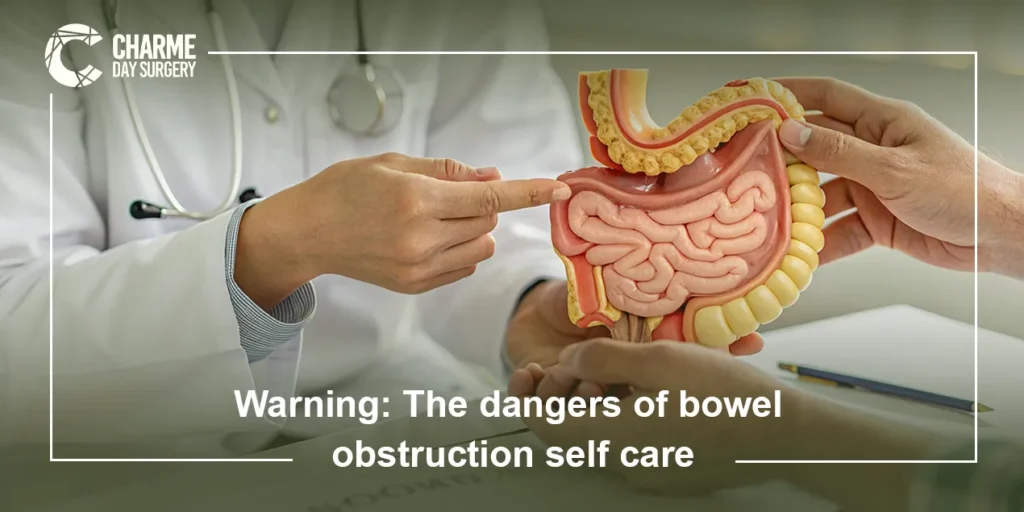
The clinical reality regarding bowel obstruction self care is that there is no safe or effective way to resolve a mechanical blockage outside of a controlled medical environment. While patients often search for how to clear an intestinal blockage at home or look for home remedies for bowel obstruction, these actions can inadvertently lead to catastrophic intestinal failure.
A bowel obstruction is a structural or functional impediment that prevents the passage of gastric contents, leading to massive pressure buildup and potential tissue necrosis.
Why “Bowel Obstruction Self Care” Can Be a Life-Threatening Mistake
Attempting self-care for a suspected obstruction is a clinical hazard because a physical blockage requires diagnostic imaging (like CT scans) and professional decompression to prevent the intestine from bursting.
- Mechanical Failure: Most obstructions are caused by physical barriers, such as surgical adhesions, hernias, or tumors, which cannot be dissolved or moved by home-based methods.
- Ischemic Risk: When the bowel is blocked, the blood supply to the intestinal wall can be compromised, leading to “strangulated” tissue that dies within hours.
- Fluid Sequestration: The body “third-spaces” massive amounts of fluid into the obstructed gut, leading to rapid, severe dehydration and electrolyte collapse that cannot be managed at home.
- False Security: Using mild home remedies may temporarily mask symptoms while the underlying pathology worsens, leading to a much more dangerous surgical scenario later.
A Bowel Obstruction Is a Medical Emergency, Not a DIY Fix
Unlike simple constipation, which may respond to fiber or fluids, an obstruction is a surgical emergency that demands “bowel rest” and intravenous support, making DIY fixes impossible and dangerous.
- Pressure Dynamics: In a blocked intestine, gas and fluid accumulate rapidly; adding anything further by mouth significantly increases the risk of a blowout.
- Clinical Monitoring: Only a hospital setting can provide the serial abdominal exams and vital sign monitoring necessary to detect early signs of sepsis or peritonitis.
- The Myth of “Natural” Resolution: Many wonder, “can you treat a bowel obstruction naturally?” The medical answer is a firm no; a mechanical twist or a tumor requires physical or surgical intervention to restore patency.
The Dangers of Attempting Self-Care for a Blockage
The primary dangers of self-treating an obstruction include the development of peritonitis (infection of the abdominal cavity), septic shock, and the need for a much more extensive bowel resection surgery due to delayed care.
- Bacterial Translocation: As the bowel wall stretches and weakens, bacteria can leak through the wall into the bloodstream even before a physical hole appears.
- Vomiting and Aspiration: Severe obstructions cause “feculent” vomiting; attempting to drink water at home can lead to inhaling this matter into the lungs, causing deadly pneumonia.
Risk of Bowel Perforation
Perforation, a hole in the intestine, is the most dreaded complication of bowel obstruction self-care, occurring when the pressure of trapped contents exceeds the strength of the intestinal tissue.
- Surgical Emergency: A perforation requires an immediate, large-incision laparotomy to wash out the abdomen and save the patient’s life.
- High Mortality: Once a bowel ruptures, the mortality rate increases significantly due to the rapid onset of septic shock.
Worsening the Blockage with Food or Laxatives
Using laxatives or eating high-fiber foods to “push through” a blockage is a critical error that forces the bowel to contract violently against a fixed object, accelerating the risk of rupture.
- What to eat with a partial bowel obstruction: If a doctor confirms a partial blockage in a hospital, they may prescribe a clear liquid diet. However, at home, the only safe rule is nothing by mouth (NPO).
- Laxative Danger: Stimulant laxatives cause the gut to spasm. When these spasms hit a blockage, the resulting pain is excruciating and the pressure can cause immediate injury to the bowel wall.
Delaying Critical Medical Intervention
Time is the most important factor in bowel viability; every hour spent on “home remedies” is an hour where the intestine is losing blood flow and moving toward permanent death.
- Loss of Bowel Segments: If treated early, a surgeon might save the whole intestine. If delayed, they may have to remove large sections, potentially leading to long-term digestive issues.
The ONLY Safe “Self Care” Step: Recognizing Symptoms and Calling a Doctor
The only clinically valid “self-care” is the rapid identification of red-flag symptoms and the immediate cessation of all oral intake while heading to an emergency department.
- Red Flags: Inability to pass gas (obstipation), projectile vomiting, and “colicky” abdominal pain that comes in waves.
- Physical Signs: A hard, distended (swollen) abdomen that is extremely tender to the touch.
What to Do While Waiting for Medical Help (Do NOT Eat or Drink)
If you suspect an obstruction, do not take any medications, do not drink water, and do not eat; simply stay upright if possible to help with breathing and seek transport to a hospital.
- Zero Intake: This includes “natural” teas or even ice chips. Any volume added to the stomach will worsen the obstruction.
- Symptom Log: Be ready to tell the medical team when you last passed gas and when your last bowel movement occurred.
What Your Doctor Will Do: Professional Medical Treatment
Professional bowel obstruction treatment utilizes nasogastric (NG) tubes to suction out gas/fluid, IV fluids to stabilize the patient, and imaging to decide between conservative management or surgery.
- Decompression: The NG tube provides nearly instant relief by removing the pressure from the stomach and upper intestine.
- Gastrografin Challenge: Doctors may use a special dye to see if a partial blockage can be cleared without surgery.
- Surgical Resolution: If the blockage is complete or the tissue is dying, a surgeon will perform an operation to remove the cause of the blockage or the dead section of the bowel.
Charme Medical Clinic offers specialized Colorectal Proctology care, prioritizing advanced diagnostic precision and patient safety.
FAQ
Is it ever safe to treat a partial bowel obstruction at home?
No. While some partial obstructions resolve without surgery, they must be monitored in a hospital. A partial obstruction can turn into a complete, life-threatening blockage in minutes, and only a physician can determine the safety of your condition via clinical imaging.
What are the signs that I need to go to the emergency room immediately?
You must seek emergency care if you have severe abdominal bloating, have not passed gas or stool for over 24 hours, and are experiencing repetitive vomiting. These are the classic signs of intestinal blockage that indicate a surgical emergency.
Can certain massages or exercises help clear a bowel obstruction?
No. Massaging the abdomen or performing vigorous exercises can be extremely harmful. If there is a mechanical blockage or a hernia, physical manipulation can cause the bowel to rupture or further strangulate the tissue, cutting off its remaining blood supply.