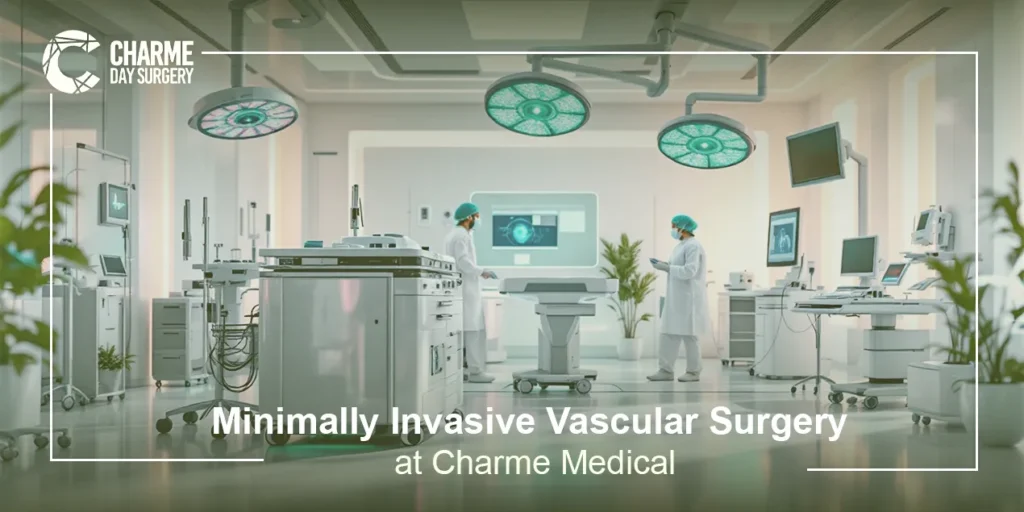
In the field of aesthetic and reconstructive medicine, vascular surgery has undergone a paradigm shift. We have moved away from the era of invasive “stripping” surgeries toward high-precision, endovascular techniques that prioritize patient comfort, safety, and immediate recovery.
Chronic Venous Disease (CVD) is a progressive medical condition. According to guidelines from the European Society for Vascular Surgery (ESVS), early intervention is critical to preventing complications such as venous ulcers or thrombosis. Today’s approach to varicose veins treatment combines the diagnostic accuracy of Doppler ultrasound with the finesse of laser technology, ensuring that we treat the root cause of the reflux rather than just the visible symptoms.
Leading Vascular Surgery & Vein Clinic
The gold standard for any vascular surgery consultation is the Eco-Doppler (Duplex Ultrasound) mapping. Before any treatment is prescribed, we must visualize the deep and superficial venous systems to assess the “hemodynamics”, the flow of blood.
In our clinical practice, we adhere to the protocols set by the Capítulo Español de Flebología (CEFyL), which emphasize a personalized mapping of the venous anatomy. No two patients have the same vascular architecture. Whether the goal is medical relief from pain or aesthetic spider veins removal, the treatment plan is dictated by the precise location of valvular incompetence. We do not simply “close veins”; we re-route blood flow to healthy vessels to restore efficient circulation.
Understanding Venous Disease
To treat the legs effectively, patients must understand the mechanics of venous insufficiency. The veins in our legs fight gravity to return oxygen-depleted blood to the heart. They rely on tiny, one-way valves to prevent backflow.
Causes of Varicose and Spider Veins
When these valves fail, a condition known as valvular incompetence, blood pools in the legs, increasing pressure on the vein walls. This is the genesis of varicose veins.
- Genetic Predisposition: This is the strongest factor. If your parents required vascular surgery, your risk increases significantly.
- Hormonal Influence: Estrogen relaxes vein walls, which explains why women are more frequently affected, particularly during pregnancy or menopause.
- Hydrostatic Pressure: Occupations requiring prolonged standing (teachers, surgeons, retail staff) increase the gravitational load on the venous system.
Symptoms: Heavy Legs and Swelling
While the visible bulging veins (varicosities) or purple networks (telangiectasias) drive patients to seek help, the functional symptoms are often more debilitating. In French medical literature, this is often described as jambes lourdes (heavy legs).
- Edema: Swelling around the ankles, usually worse in the evening.
- Venous Claudication: A cramping or aching sensation after walking or standing.
- Cutaneous Changes: In advanced stages (CEAP classification C4-C6), the skin may darken (hyperpigmentation) or become hardened (lipodermatosclerosis) due to chronic inflammation.
Modern Treatment Options (Non-Surgical Focus)
The term “vascular surgery” can be misleading in the modern context because the vast majority of our procedures are now ambulatory (walk-in, walk-out) and require no incisions. We focus on endovascular thermal and chemical ablation.
Laser Treatment for Varicose Veins (EVLA)
Endovenous Laser Ablation (EVLA) is currently the international gold standard for treating the Great Saphenous Vein (the large vein often responsible for varicosities). It has largely replaced surgical stripping due to lower recurrence rates and minimal downtime.
- The Procedure: Under local tumescent anesthesia (which numbs the area and protects surrounding tissues), a thin laser fiber is inserted into the diseased vein via a needle puncture.
- The Mechanism: The laser emits thermal energy that damages the collagen in the vein wall, causing the vein to collapse and seal shut (fibrosis). The body eventually reabsorbs this tissue, and blood is naturally rerouted to healthy deep veins.
- The Outcome: The Société Française de Phlébologie cites success rates above 95% for thermal ablation. The procedure takes less than an hour, and no stitches are required.
Sclerotherapy for Spider Veins
For smaller reticular veins and spider veins removal, thermal energy is often too aggressive. Here, we utilize chemical sclerosis.
- Liquid Sclerotherapy: Ideal for the finest superficial veins. A sclerosing agent (often Polidocanol) is injected, irritating the vessel lining and causing it to fade.
- Foam Sclerotherapy: By mixing the liquid sclerosant with air/gas (the Tessari method), we create a microfoam. This thick consistency displaces blood and ensures better contact with the vein wall, allowing us to treat larger, tortuous veins without surgery.
This is an art form; precise injection technique is required to prevent staining (hemosiderin deposition) and ensure an even, aesthetic result.
Diabetic Foot Care and Vascular Health
A comprehensive vascular practice must also address arterial health, particularly in diabetic patients. Diabetes accelerates atherosclerosis (hardening of the arteries) and causes neuropathy (nerve damage). This combination is dangerous because a patient may develop a wound they cannot feel, while poor blood flow prevents healing.
We emphasize preventative vascular surgery screenings using the Ankle-Brachial Index (ABI) to measure arterial flow.
- Surveillance: Regular checks can detect Peripheral Arterial Disease (PAD) before gangrene sets in.
- Wound Management: In cases of diabetic ulcers, revascularization procedures (such as angioplasty) may be necessary to restore blood flow to the foot and prevent amputation.
- Education: Patients are taught to inspect their feet daily. Even minor trauma in a diabetic foot requires immediate vascular assessment.
Recovery After Vein Procedures
One of the most common misconceptions is that vascular surgery or varicose veins treatment requires bed rest. In fact, the opposite is true.
- Immediate Mobilization: We require patients to walk immediately after EVLA or sclerotherapy. The contraction of the calf muscles acts as a pump, forcing blood into the deep system and reducing the risk of Deep Vein Thrombosis (DVT).
- Compression Therapy: Patients must wear medical-grade graduated compression stockings for a specific period (usually 1–2 weeks) post-procedure. This keeps the treated veins closed and reduces bruising.
- Sun Avoidance: For spider veins removal, avoiding UV exposure is crucial for 4 weeks to prevent hyperpigmentation at the injection sites.
Most patients return to work the same day or the following day. We advise avoiding high-impact sports or heavy lifting for roughly one week to allow the treated vessels to heal securely.
Conclusion: Expertise in Circulation and Aesthetics
Modern vascular surgery is a fusion of medical necessity and aesthetic refinement. Whether utilizing Endovenous laser ablation (EVLA) to treat heavy, painful legs or performing microsclerotherapy for spider veins removal, the goal is to restore the natural efficiency of your circulatory system.
By following the rigorous standards of European phlebology, we ensure that treatments are not only visually pleasing but also durable and safe. If you are experiencing leg fatigue, swelling, or visible vein changes, a consultation with a specialized vascular physician is the proactive step toward long-term mobility and confidence.
Know more about: Comprehensive Gastroenterology Treatment Solutions
FAQ
Is laser treatment for varicose veins permanent?
Yes, Endovenous Laser Ablation (EVLA) permanently destroys the treated vein section. The body absorbs the closed vein over time. However, venous disease is chronic; while the treated vein will not return, new varicose veins can develop in other areas if genetic predisposition or risk factors (like prolonged standing) persist. Regular follow-ups are recommended.
Does insurance cover vascular surgery?
Generally, insurance covers vascular surgery and varicose veins treatment if the condition is deemed medically necessary, meaning it causes symptoms like pain, swelling, or skin ulcers, and is confirmed by ultrasound. Purely cosmetic procedures, such as spider veins removal, are typically not covered. We recommend a consultation to document medical necessity.
Can I walk immediately after vein treatment?
Yes, walking is mandatory. We instruct patients to walk for at least 15–20 minutes immediately after the procedure. This activates the calf muscle pump, which helps prevent blood clots and aids in recovery. You should remain active but avoid strenuous gym workouts for about a week.